
Caesar salad origin: the surprising history of the caesar salad
Caesar salad origin: the surprising history of the caesar salad
The Caesar salad is a composed dish created from improvisation in a Tijuana kitchen in 1924 that went on to redefine how Americans think about salads, restaurant service, and what constitutes a complete meal.
We cover the salad's disputed origins and inventor controversy, its original seven-ingredient recipe, the celebrity culture and Prohibition-era tourism that fueled its rise, the ways it reshaped restaurant dining norms, its recipe evolution over the past century, and how locally sourced garden dining continues to elevate this classic.
Caesar Cardini, an Italian immigrant, assembled the first Caesar salad on July 4, 1924, at his Tijuana restaurant when the kitchen ran low on supplies. His brother Alex also claimed credit, and that family dispute over the "authentic" version remains unresolved to this day.
The original recipe used just seven ingredients: whole romaine leaves, raw egg yolk, olive oil, Parmigiano-Reggiano, Worcestershire sauce, lime juice, and toasted baguette. Notably, it contained no anchovies. Cardini prepared everything tableside, and guests ate the uncut leaves by hand.
Hollywood stars and Prohibition-era tourists carried the dish's reputation from Tijuana across the United States, and by 1953 the International Society of Epicures crowned it the greatest recipe to originate in the Americas in 50 years.
The Caesar introduced tableside theater to casual dining, popularized the shareable starter format, and pioneered the protein-topped salad that turned greens into a legitimate main course. Over 21% of U.S. restaurants now feature it on their menus.
Decades of evolution replaced raw egg with emulsified dressings, added grilled chicken as a staple protein, and swapped romaine for kale and alternative greens. Today, Glass & Vine in Coconut Grove channels that same inventive spirit through locally sourced, garden-forward dining beneath the oaks of Peacock Park.
Who Actually Invented the Caesar Salad?
Caesar Cardini, an Italian immigrant, is widely credited as the inventor of the Caesar salad. The story involves a busy holiday, a Tijuana restaurant, and a family dispute over credit.
Did Caesar Cardini Create the Salad in Tijuana in 1924?
Yes, Caesar Cardini created the salad in Tijuana in 1924. According to National Geographic, the Caesar salad was born in the Mexican border city of Tijuana, where Italian immigrant Caesar Cardini had opened Restaurante Caesar's to attract U.S. visitors craving an escape from Prohibition-era laws. The dish came together on July 4, 1924, when the kitchen was overwhelmed and short on ingredients. Cardini improvised with what he had: whole romaine lettuce leaves, a raw egg yolk, Italian olive oil, grated Parmigiano-Reggiano, Worcestershire sauce, lime juice, and toasted baguette rounds. Prepared tableside with theatrical flair, the salad became an immediate sensation. Hollywood film stars reportedly made the trek south of the border to try it, and Julia Child later recalled watching its preparation during a family visit in the 1920s as one of her earliest restaurant memories.
What Role Did Alex Cardini Play in the Recipe?
Alex Cardini, Caesar's brother, played a contested but significant role in the recipe's development. Some historical accounts claim Alex actually created the salad, originally naming it the "Aviator Salad" because he made it for aviators who crossed into Tijuana during Prohibition. Alex also introduced additions that his brother had excluded, including garlic and whole anchovies. Caesar himself considered the trace of anchovy in Worcestershire sauce sufficient for umami. This family disagreement over the "authentic" version persisted for years, with both brothers laying claim to the original recipe. Whether Alex refined an existing dish or invented it independently remains one of culinary history's most enduring debates.
Why Did the Salad Originate in Mexico Instead of Italy?
The salad originated in Mexico instead of Italy because of Prohibition. When the United States banned alcohol in 1920, Tijuana became a popular destination for Americans seeking drinks, entertainment, and unrestricted dining. Caesar Cardini, though Italian-born and living in San Diego, strategically operated his restaurant across the border to capitalize on this cross-border tourism boom. Tijuana's relaxed atmosphere and proximity to Southern California drew a steady stream of visitors, particularly on holidays. The July 4th crowd that overwhelmed Cardini's kitchen in 1924 was a direct result of this migration pattern. Without Prohibition driving Americans south, the improvised dish that became a global staple might never have been assembled.
With the origin story established, the original ingredients reveal why this simple combination proved so revolutionary.
What Were the Original Ingredients in Caesar Salad?
The original Caesar salad contained just seven simple ingredients. The subsections below explore the distinctive tableside dressing, the anchovy debate, and why diners ate whole romaine leaves with their hands.
What Made the Original Tableside Dressing Unique?
The original tableside dressing was unique because Caesar Cardini assembled it from scratch in front of guests using only raw egg yolk, Italian olive oil, Worcestershire sauce, and lime juice. According to a UCHealth Today article, Rosa Cardini confirmed her father cobbled together merely seven ingredients: whole romaine leaves, raw egg yolk, Italian olive oil, grated Parmigiano-Reggiano, Worcestershire sauce, lime juice, and a toasted baguette round. No blender, no premixed jar. Each element was layered by hand at the table, creating an interactive ritual that turned a simple salad into theater. That deliberate minimalism, built on technique rather than complexity, is what separated it from every other dressing of the era.
Did the First Caesar Salad Include Anchovies?
No, the first Caesar salad did not include anchovies. According to UCHealth Today, Rosa Cardini stated that her father did not use whole anchovies. He considered the anchovy-derived umami already present in Lea & Perrins Worcestershire sauce sufficient for the dressing's savory depth. Additions like garlic and standalone anchovies came later, introduced by others, including Caesar's brother Alex, who also claimed credit for the "authentic" recipe. This distinction matters because modern versions almost universally list anchovies as a core ingredient. The original, however, achieved its savory backbone through Worcestershire sauce alone, making the anchovy association a later evolution rather than a founding choice.
Why Were Whole Romaine Leaves Eaten by Hand?
Whole romaine leaves were eaten by hand because Caesar Cardini intentionally left them uncut. Rather than chopping the lettuce, he selected inner romaine hearts and arranged them whole so guests could pick up each leaf, coated in dressing, and eat it like finger food. This approach was both practical and theatrical. With a stripped-down kitchen on a busy Fourth of July, keeping leaves intact required no extra prep. It also reinforced the salad's tableside spectacle, giving diners a tactile, communal experience that felt casual yet elegant. That hands-on presentation style influenced how restaurants later approached shareable, interactive dishes.
With its minimalist recipe established, the Caesar salad's next chapter was its rapid spread across America.
Why Did Caesar Salad Become So Popular in America?
Caesar salad became so popular in America through a combination of celebrity endorsement and Prohibition-era cross-border tourism. By 1953, the International Society of Epicures in Paris crowned it "the greatest recipe to originate in the Americas in the past 50 years," according to Restaurant Business Online.
How Did Hollywood Celebrities Spread the Salad's Fame?
Hollywood celebrities spread the salad's fame by making high-profile trips to Tijuana specifically to eat at Caesar Cardini's restaurant. Film stars of the era reportedly trekked south of the border to try the dish, turning a local creation into a culinary sensation. Julia Child described watching its tableside preparation during a visit with her family in the 1920s as one of her earliest restaurant memories, according to Restaurant Business Online. When figures of that cultural stature championed a dish, word traveled fast through social circles, gossip columns, and dinner party conversations. Their enthusiasm transformed the Caesar from a regional curiosity into a must-try experience, establishing the kind of aspirational dining appeal that restaurants still chase today.
What Role Did Prohibition-Era Tourism to Tijuana Play?
Prohibition-era tourism to Tijuana played a foundational role in the Caesar salad's rise. When the United States banned alcohol in 1920, Americans flooded border towns seeking drinks, entertainment, and unrestricted dining. Caesar Cardini had strategically opened Restaurante Caesar's in Tijuana to attract exactly these visitors. The salad debuted on July 4, 1924, a holiday weekend that would have drawn especially large crowds of American tourists. Every satisfied guest carried the experience home, spreading word across California and beyond. This steady stream of cross-border visitors gave the dish organic, nationwide exposure long before food media existed. Without Prohibition driving Americans into Tijuana, the Caesar salad might never have reached the audiences who propelled it to icon status.
From cultural buzz to structural influence, the Caesar salad reshaped how restaurants approached dining itself.
How Did Caesar Salad Change Restaurant Dining Culture?
Caesar salad changed restaurant dining culture by introducing tableside theater, normalizing shared starters, and proving a salad could anchor a meal. According to Tastewise, 21.30% of U.S. restaurants (232,322 locations) now offer Caesar salad on their menus. The subsections below explore each of these shifts.
How Did Tableside Preparation Influence Fine Dining?
Tableside preparation influenced fine dining by transforming meal service into live performance. Caesar Cardini's original method of tossing romaine, egg yolk, and Parmesan in front of guests introduced a dramatic, interactive element that restaurants had rarely offered. This ritual elevated the diner's role from passive consumer to engaged spectator, setting a precedent that fine dining establishments adopted for dishes well beyond salad. Tableside carving, flambéing, and sauce finishing all trace part of their modern appeal back to this same principle: the kitchen comes to the guest. For restaurants today, that sense of occasion remains a powerful differentiator, turning a simple plate into a memorable experience.
How Did Caesar Salad Popularize the Shareable Starter?
Caesar salad popularized the shareable starter by proving that a single, generously portioned dish could open a meal for an entire table. Before its rise, appetizers were typically individual portions. Caesar's large bowl of whole romaine leaves, tossed and dressed in full view, invited communal eating in a way few dishes had. This format encouraged tables to order one impressive plate together rather than several small ones, reshaping how restaurants structured their menus. The shareable starter model that Caesar salad helped establish is now a cornerstone of modern dining, visible in everything from mezze platters to charcuterie boards.
How Did It Shift Salad From Side Dish to Main Course?
Caesar salad shifted from side dish to main course by accepting protein toppers that made it a center-of-the-plate option. According to Restaurant Business Online, the Caesar coincided with the 1990s culinary revolution as a composed salad that was more sophisticated than the familiar tossed variety, notably flavor-forward with Worcestershire, Parmesan, and garlic. Its ready acceptance of grilled chicken, shrimp, and steak marked a revolutionary departure from the expectation that every meal required three hot courses. This single innovation reshaped how American restaurants think about salads, treating greens as a legitimate foundation for a satisfying, complete entrée rather than an afterthought beside the main plate.
Understanding how Caesar salad reshaped dining norms reveals why the recipe itself continued to evolve over the following decades.
How Has the Caesar Salad Recipe Evolved Over the Decades?
The Caesar salad recipe has evolved over the decades through changes in dressing technique, protein additions, and base greens. Each shift reflects broader culinary trends, from food safety awareness to the rise of health-conscious dining.
How Did the Dressing Change From Raw Egg to Emulsified?
The dressing changed from raw egg to emulsified versions primarily due to food safety concerns. Caesar Cardini's original 1924 recipe called for a raw egg yolk coddled briefly and whisked tableside with olive oil and lime juice. As food safety science advanced, the risk of salmonella made raw egg preparations less viable for high-volume restaurants. Chefs began using fully emulsified dressings, incorporating pasteurized eggs, mayonnaise bases, or egg-free alternatives like plain yogurt, kefir, and buttermilk to achieve the classic creaminess. These substitutions preserved the rich, tangy texture while eliminating the raw egg risk. The result is a more shelf-stable, consistently creamy dressing that works for both restaurant kitchens and bottled retail products.
When Did Grilled Chicken Caesar Become a Staple?
Grilled chicken Caesar became a staple during the 1990s culinary revolution in the United States. The Caesar salad's ready acceptance of protein toppers sealed its position as a menu mainstay, transforming it from a starter into a center-of-the-plate option. According to a 2024 feature in Restaurant Business Online, this shift marked "a revolutionary departure from the three-hot-squares-a-day rule," as the composed salad proved more sophisticated than the familiar tossed variety. Grilled chicken was the natural protein pairing; it was lean, affordable, and complemented the bold Parmesan and garlic flavors without overpowering them. This single addition helped redefine what a salad could be on American menus, turning it into a full meal rather than a precursor to one.
How Have Kale and Alternative Greens Reinvented It?
Kale and alternative greens have reinvented the Caesar salad by expanding it beyond its original romaine lettuce base. Chefs now build Caesar-style salads with lacinato kale, baby spinach, shaved Brussels sprouts, and mixed bitter greens. Kale's sturdier leaf holds up to heavy dressings and bold toppings better than delicate romaine, making it a practical swap for restaurants. The trend also reflects broader consumer demand for nutrient-dense ingredients and plant-forward dining. This evolution toward fresher, more diverse greens is evident at Glass & Vine in Coconut Grove, where the menu emphasizes locally sourced ingredients that bring seasonal vitality to classic composed salads. These adaptations show how fiercely personal Caesar has become; in 2007, a Chicago Tribune report detailed how Pearl Oyster Bar owner Rebecca Charles sued a former sous-chef over her proprietary Caesar recipe, underscoring that today's variations carry real creative and commercial value. Understanding this evolution reveals how one salad reshaped broader expectations around restaurant dining.
Why Is Caesar Salad Considered a Dish That Changed How We Eat?
Caesar salad is considered a dish that changed how we eat because it redefined salad's role on the American plate, transforming it from a forgettable side into a legitimate main course. Before Caesar, salads rarely anchored a meal. This single recipe shifted dining expectations by proving that a composed salad could deliver the complexity, satisfaction, and visual drama previously reserved for hot entrées.
The Caesar's influence runs deeper than its ingredients. Its tableside preparation introduced theatrical presentation to casual dining, setting a precedent that restaurants still follow. Its bold, layered dressing, built on umami-rich Worcestershire, sharp Parmesan, and raw egg emulsion, showed diners that salads could be intensely flavorful rather than bland or virtuous. According to Tastewise data, 21.30% of U.S. restaurants (232,322 locations) now offer Caesar salad on their menus, a penetration rate that few single dishes can match.
Perhaps most significantly, the Caesar salad pioneered the protein-topped salad format. By readily accepting grilled chicken, shrimp, or steak, it became a center-of-the-plate option that broke what Restaurant Business Online called "the three-hot-squares a day rule." That shift opened the door for an entire category of entrée salads that now dominate lunch menus nationwide. Modern restaurants like Glass & Vine continue this tradition with all-day menus that feature salads and shared plates designed as complete meals, moving beyond traditional dining structures to embrace more flexible, ingredient-focused dining. In many ways, every grain bowl, chopped salad, and build-your-own greens concept traces its lineage back to a Tijuana kitchen running low on supplies in 1924.
For any dish to change how people eat, it must alter both expectations and behavior. The Caesar salad accomplished both: it raised the standard for what a salad could taste like and gave diners permission to order one as a full meal. That cultural shift, now a century old, shows no signs of reversing.
What Controversies and Myths Surround Caesar Salad's Origin?
The controversies and myths surrounding Caesar salad's origin center on disputed inventor claims, a rumored earlier name, and persistent confusion about the dish's namesake. These debates have followed the salad since the 1920s.
One of the most enduring disputes involves Caesar Cardini's brother, Alex Cardini, who also claimed credit for the recipe. According to Wikipedia, some accounts state that Alex Cardini made the salad and that it was previously named the "Aviator Salad" because it was prepared for aviators who traveled to Tijuana during Prohibition. This alternate origin story directly challenges the widely accepted July 4, 1924 narrative.
Beyond the family rivalry, several other myths persist:
- Caesar salad was named after Julius Caesar. The dish takes its name from Caesar Cardini, not the Roman emperor.
- The original recipe always included anchovies. Caesar Cardini reportedly opposed whole anchovies, relying instead on the anchovy content within Worcestershire sauce for umami depth.
- The salad was invented in Italy. Despite Cardini's Italian heritage, the dish originated in Tijuana, Mexico, where he operated Restaurante Caesar's.
- A single "authentic" recipe exists. Even within the Cardini family, Alex and Caesar disagreed on the definitive version, with each promoting different ingredient lists.
What makes the Caesar salad origin story so fascinating is how the lack of formal documentation from a busy 1920s kitchen allowed multiple narratives to flourish simultaneously. None of these claims can be fully verified or dismissed, which only adds to the dish's mystique. Understanding these origin debates sets the stage for how locally sourced ingredients continue reshaping classic dishes today.
How Does Locally Sourced Garden Dining Elevate a Classic Like Caesar Salad?
Locally sourced garden dining elevates a classic like Caesar salad by prioritizing fresh, seasonal ingredients and transparent sourcing that transform a familiar dish into something more vibrant. Below, explore how Glass & Vine's setting enhances this experience and the key takeaways from Caesar salad's remarkable history.
Can Glass & Vine's Open-Air Dining in Coconut Grove Enhance the Caesar Salad Experience?
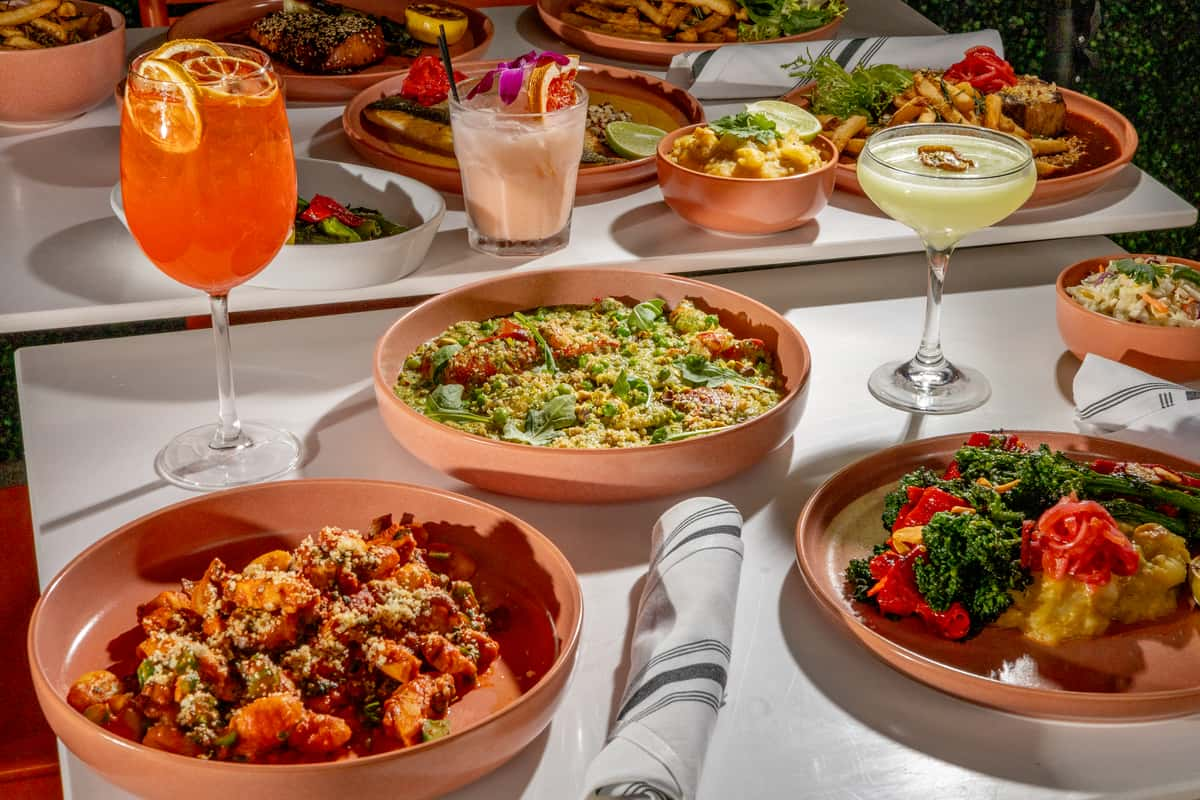
Yes, Glass & Vine's open-air dining in Coconut Grove can enhance the Caesar salad experience. Nestled beneath the oak canopy of Peacock Park, Glass & Vine pairs locally sourced ingredients with a lush, garden-inspired atmosphere that connects guests to the natural origins of their meal. This setting recalls the spirit of Caesar Cardini's original tableside preparation, where the dining environment was inseparable from the dish itself.
Glass & Vine features a menu built around a bounty of locally sourced ingredients, and that farm-to-table philosophy directly benefits a composed salad like the Caesar. According to a 2025 Market Intelo report, the global farm-to-table restaurant market reached $115.8 billion and is projected to grow at a 10.2% compound annual rate through 2034. When fresh greens and quality Parmigiano travel shorter distances from source to plate, the difference is something you can taste.
What Are the Key Takeaways About the History of Caesar Salad and How It Changed the Way We Eat?
The key takeaways about the history of Caesar salad and how it changed the way we eat center on improvisation, cultural crossover, and the lasting power of simplicity. Born from a busy holiday kitchen in 1924 Tijuana, the Caesar salad proved that resourceful cooking could produce an enduring icon. Its theatrical tableside presentation helped establish dining as entertainment, while its acceptance of protein toppers shifted salads from side dishes to satisfying main courses.
A century later, the dish remains more relevant than ever. According to Tastewise data, social conversations about Caesar salad have increased by 17.08% year over year. That sustained cultural momentum, combined with growing consumer demand for transparency in sourcing, means the Caesar salad continues to evolve alongside the restaurants that serve it. For diners seeking that evolution firsthand, few settings capture the connection between ingredient quality and memorable dining quite like a garden table in Coconut Grove.